Getting cited in ChatGPT means having your brand, product or content referenced inside one of ChatGPT's answers when a user asks a question in your category. A citation can take three forms: a direct link (most visible and valuable), a brand mention without a link, or a recommendation ("for Australian businesses, ClickedOn is a good option"). All three drive real traffic, but linked citations are the ones that show up inside GA4 as referral sessions from chatgpt.com.
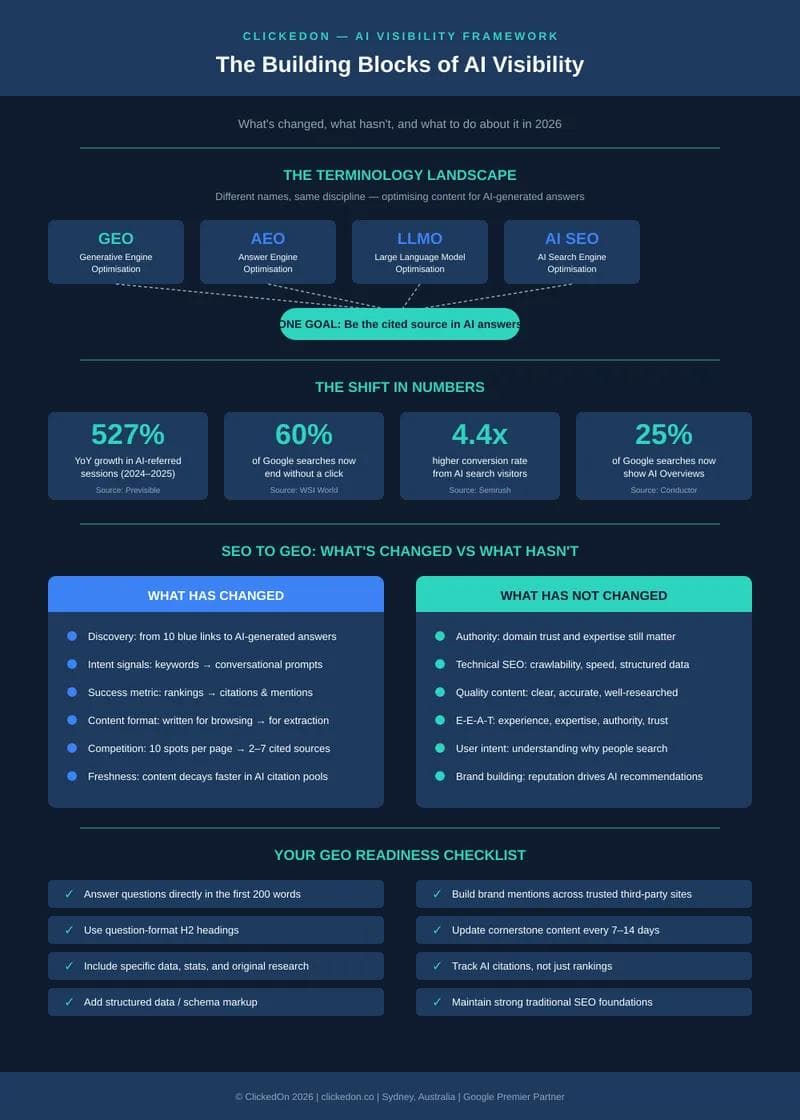
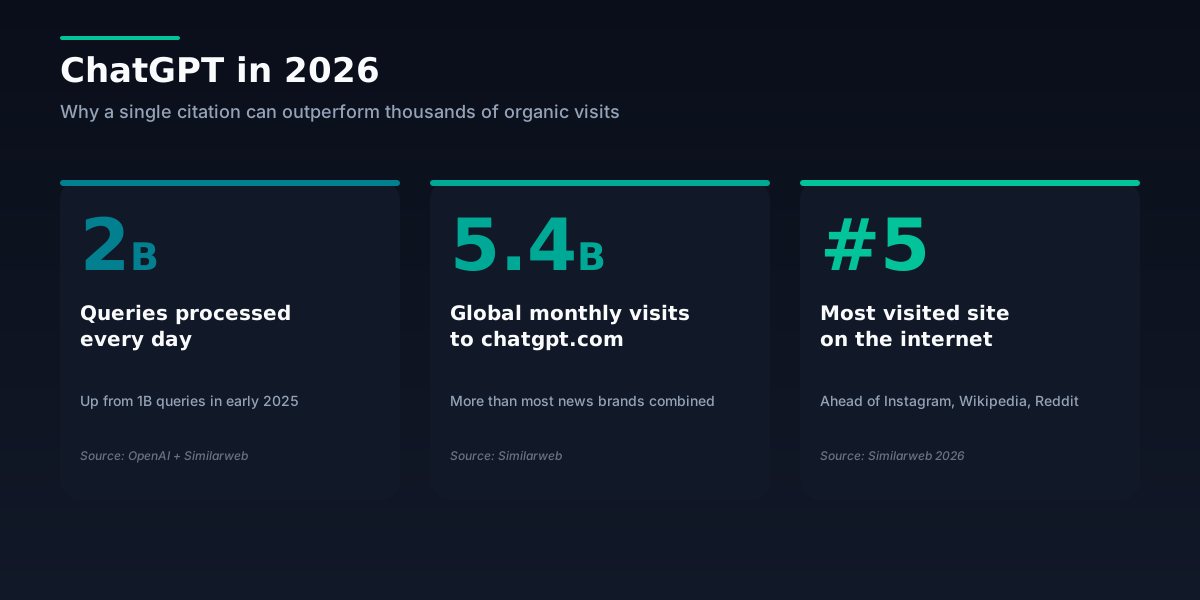
Why it matters: ChatGPT now processes around 2 billion queries every day and receives 5.4 billion monthly visits, making it the fifth most visited site in the world according to Similarweb. Previsible's AI Traffic Report tracked a 527% year-on-year rise in AI-referred sessions and found that AI traffic converts at 4.4 times the rate of traditional organic. Inside ClickedOn's own data the lift is closer to 10x. When a buyer arrives from ChatGPT, they have already interrogated their options in conversation with the model. They are closer to a decision than almost any other traffic source, which is why a single citation often outperforms thousands of classic organic visits. This playbook covers the eight things we do for clients to earn and defend those citations in 2026. For the tactical layer specifically, our ChatGPT SEO service runs this workflow as a managed programme.
How does citation work inside ChatGPT?
ChatGPT cites sources through two pathways. The first is the model's training data: if your content was present and prominent when GPT-4 or GPT-5 was trained, the model has a baseline knowledge of your brand and may mention it even without browsing. The second is live retrieval: ChatGPT's browse feature (powered by Bing and OpenAI's own web index) fetches fresh sources when a query needs current information. The live retrieval pathway is where most visible citations happen today, because it is the one that surfaces clickable links.
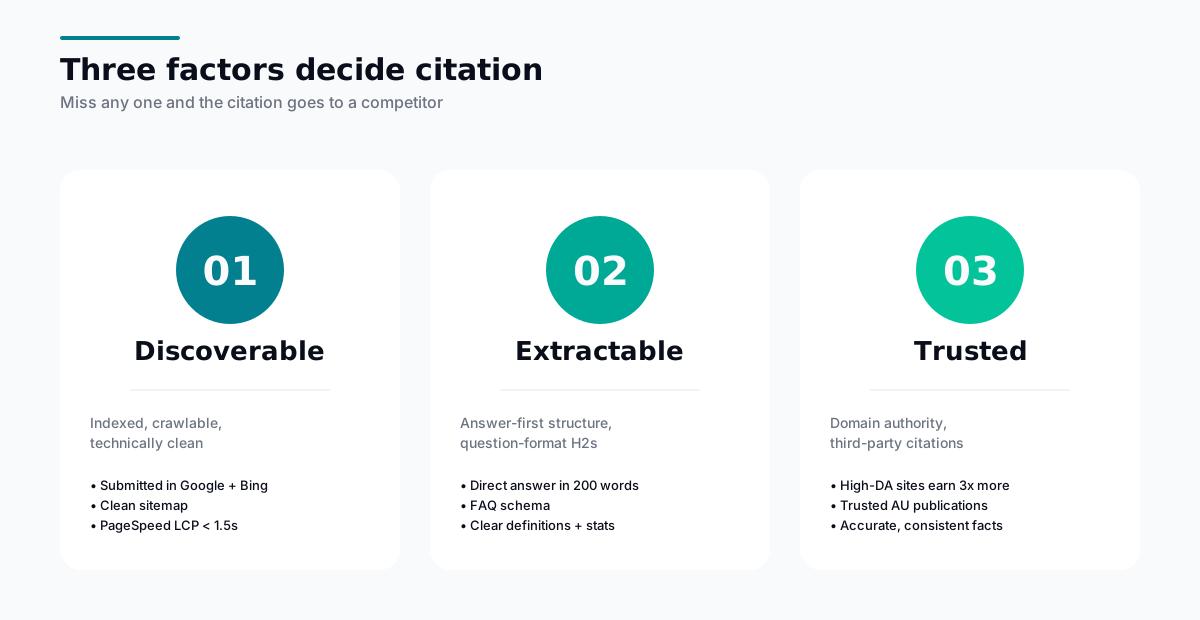
To earn a citation via retrieval, your page needs to do three things. It needs to be discoverable (indexed, crawlable, and technically clean). It needs to be extractable (answer-first structure, question-format headings, clear definitions). And it needs to be trusted (domain authority, third-party citations, and a track record of accurate content). Miss any of the three and you will not be cited, even if you rank well in traditional Google.
Step 1: Audit your current ChatGPT visibility
Before you change anything, find out where you stand. Open ChatGPT and run 10 to 20 queries your ideal customer would ask. Start with commercial intent ("best B2B CRM for Australian SMEs", "Sydney performance marketing agency"), then move to informational intent ("what is generative engine optimisation", "how do Google AI Overviews work"). Note every brand ChatGPT mentions, which pages it links to, and the wording it uses. This becomes your baseline.
Do the same exercise in Perplexity, Google AI Mode and Claude. The citation patterns are different on each platform, and a full AI visibility audit needs to cover all of them. Our free GEO Readiness Checker scores your domain against the technical and structural factors that drive citation frequency and returns a benchmarked result in under a minute.
Step 2: Rewrite your top pages in answer-first format
The single biggest lever for earning ChatGPT citations is answer-first content structure. The first 200 words of every key page should be a self-contained definition of the topic, written in plain prose, directly answering the primary query. No preamble, no throat-clearing, no "in this article we will explore". Just the answer, clearly and concisely, in language an LLM can extract verbatim.
This sounds obvious but almost no business sites do it well. Rewrite your top 10 highest-traffic pages with this structure. Put a two-sentence direct answer at the top, follow it with a one-paragraph expansion, then move into the detailed content. Question-format H2 headings ("What is X?", "How does Y work?") dramatically increase the chance that ChatGPT lifts a section of your page into its answer. Internal links inside those sections also help, which is why every ClickedOn blog post contains at least five contextual links to service pages and related articles.
Step 3: Build domain authority through citations on trusted sites
SE Ranking's analysis of 2.3 million pages found that high-domain-authority sites earn 3x more AI citations than lower-authority sites. The same analysis showed that 76% of URLs cited in Google AI Overviews also rank in the top 10 organic results. Authority still matters, and the fastest way to build it is through citations on trusted industry publications.
For B2B businesses that means bylined articles and expert commentary in trade publications your buyers already read. For consumer brands it means PR pickups in major news and lifestyle sites. ChatGPT's retrieval model heavily weights sources it already trusts, so a single placement on a site like SmartCompany, AFR or the ABC can be worth more than dozens of guest posts on low-authority blogs. Our dedicated brand citations for AI service runs this workstream end-to-end.
Step 4: Implement clean schema markup
Schema markup tells search engines and AI crawlers what your page is about in a structured, unambiguous format. Organization schema identifies your brand. Article schema marks up blog content with author, publish date and modification date. FAQPage schema flags question-and-answer blocks for extraction. Product schema surfaces pricing and review data. Every one of these signals makes it easier for ChatGPT and other AI engines to understand your content and cite it accurately.
Use our free schema generator to produce valid JSON-LD for the most common schema types. Validate it through Google's Rich Results Test before deploying. Schema alone will not earn you a citation, but missing or broken schema will actively prevent one.
Step 5: Keep cornerstone content fresh
AI engines heavily favour fresh content. Content freshness is one of the most reliable ways to move from "occasionally cited" to "consistently cited" on a given topic. For cornerstone pages (the 10 to 20 pages that define your brand in AI answers), we recommend a meaningful update every 7 to 14 days. That does not mean republishing the same page with a new date. It means adding new statistics, new examples, new internal links, new sections that reflect how the category has moved.
ChatGPT's retrieval model rewards pages that have been updated recently and penalises stale content in fast-moving topics. A 2025 blog post on GEO that has not been touched since publication is less likely to be cited than a 2024 post that has been refreshed twice in the last month.
Step 6: Earn third-party brand mentions
Beyond direct citations, ChatGPT also weighs unlinked brand mentions across the web. If your business name appears in enough industry conversations, podcast transcripts, Reddit threads and news articles, ChatGPT builds a latent association between your brand and your category. The next time a user asks "who does X in Australia", your brand is more likely to surface even without a direct link.
Practical tactics: get your leadership on the podcasts your buyers listen to, contribute to industry roundups and "state of" reports, post meaningful content on LinkedIn that gets shared and discussed, and answer questions in public communities where your buyers hang out. None of this is new marketing advice. What is new is that AI engines now weight it directly into their citation decisions.
Step 7: Expand across every major AI engine
ChatGPT is the biggest AI engine by a distance, but it is not the only one. Perplexity is growing fast. Google AI Overviews and AI Mode reach a large slice of Google's traffic (around 25% of results now include an AI Overview, up from 13% a year earlier). Claude and Gemini both have dedicated user bases. Microsoft Copilot is embedded in Windows and Microsoft 365. Each platform has slightly different retrieval logic and slightly different citation patterns.
Optimising for ChatGPT alone leaves citations on the table. The upside is that most of the work transfers. Answer-first content, clean schema, domain authority and content freshness move the needle on every platform. The last 10% is platform-specific: understanding which sources each engine trusts most, and making sure you are present on them. Our GEO programme covers all of the major engines as a single workstream.
Step 8: Measure and defend your citations
Set up GA4 with referral tracking for chatgpt.com, perplexity.ai, and the other major AI domains. Tag campaigns so you can attribute AI-sourced conversions. Run monthly citation audits by replaying your baseline queries in each engine and tracking how your brand's citation share changes over time. Citations are not static. Competitors publish, AI engines update their retrieval models, and your position can move in either direction. Measurement is how you catch declines early and defend the ground you have already earned.
Common mistakes that stop businesses getting cited
The first mistake is treating ChatGPT as a one-time audit instead of an ongoing measurement surface. Citation share moves month by month. A page that was cited in January can be quietly replaced by a competitor's fresher content in March. Businesses that audit once and walk away lose ground without realising it.
The second mistake is optimising only the homepage. ChatGPT cites specific pages that answer specific queries, which means your blog posts, guides, service pages and comparison articles are the surfaces that actually earn citations. Homepages rarely get cited because they are too broad. The practical implication is that your content calendar is the single most important lever for ChatGPT visibility.
The third mistake is writing in marketing voice. ChatGPT's retrieval model prefers clean, factual prose with specific numbers and named sources. Content that reads as promotional copy ("our industry-leading platform empowers businesses to") gets extracted less often than content that reads as an informational answer ("ChatGPT processes around 2 billion queries per day"). The fix is to rewrite key pages in neutral, fact-dense language that sounds like an explainer rather than a sales pitch.
The fourth mistake is ignoring platform differences. ChatGPT, Perplexity, Google AI Overviews and Claude each weight sources slightly differently. ChatGPT trusts Bing's index heavily. Perplexity uses its own web index and leans toward primary sources. Google AI Overviews correlate strongly with top-10 organic rankings. Claude is more conservative about citing sources at all. A single content strategy can address all four, but the measurement has to be platform-specific.
What changes in 2026
Three things are changing the ChatGPT citation landscape in 2026. The first is the rapid expansion of GPT-5 and successor models, which have longer context windows and more sophisticated retrieval pipelines. Longer context windows mean ChatGPT can pull in more sources per answer, which increases the chance that your content is cited if it is well-structured. The second is the growth of ChatGPT's agent capabilities, which let the model take actions on the user's behalf. Agent-driven workflows put a premium on sites that expose structured data cleanly and have clear conversion paths. The third is the arrival of paid placements inside ChatGPT. OpenAI has signalled that sponsored results will appear in AI answers, which will sit alongside (not replace) earned citations. Businesses that build a strong organic citation base now will have a head start when paid placements become widely available.
Putting it all together
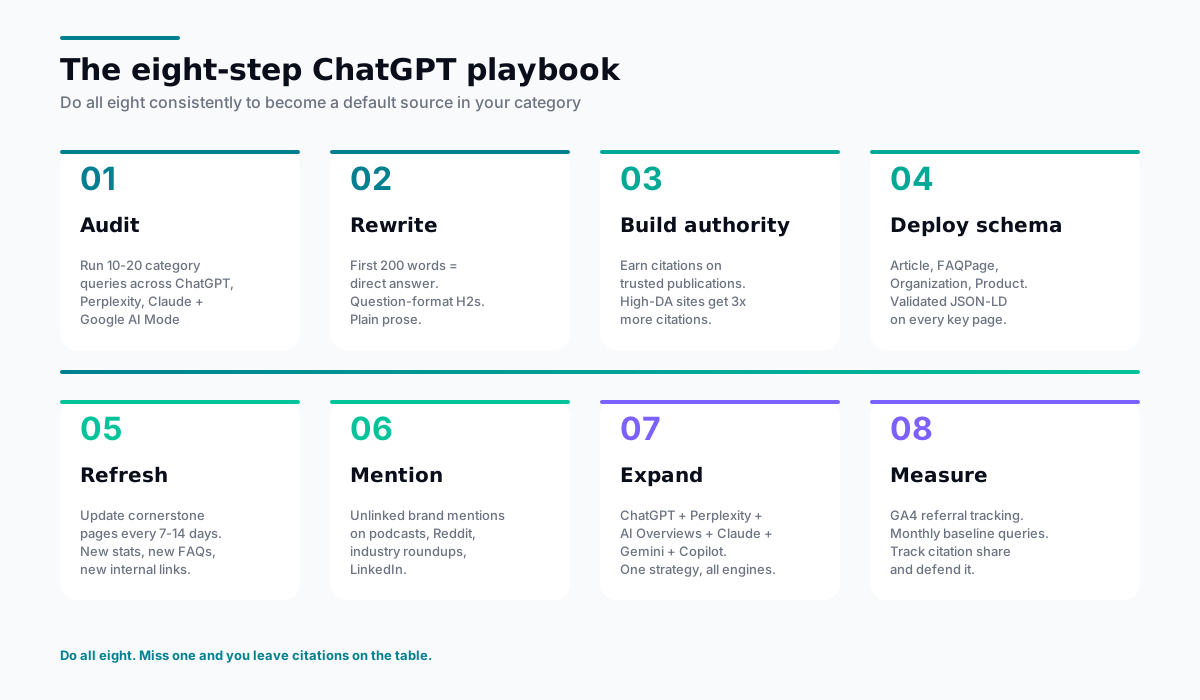
Getting cited in ChatGPT is not a single tactic. It is the combination of eight things: a baseline audit, answer-first content, domain authority through citations on trusted sites, clean schema markup, content freshness, third-party brand mentions, multi-platform presence, and ongoing measurement. Miss any one and you leave citations on the table. Do all eight consistently and you become one of the default sources ChatGPT reaches for when a user asks a question in your category.
ClickedOn has been managing over $12m in annual ad spend for a decade and has been one of Australia's first agencies running a formal GEO programme. The playbook above is what we run for clients.
Frequently asked questions
How do I know if ChatGPT is already citing my business?
Open ChatGPT in a signed-out browser and run ten to twenty queries an ideal customer would ask. Note whether your brand is mentioned, which pages (if any) are linked, and the framing. Repeat the exercise in Perplexity, Google AI Mode and Claude. That is your baseline. Our free AI Visibility Audit automates the same check against a benchmarked sample of category prompts in under a minute.
How long does it take to earn a ChatGPT citation?
With the groundwork already in place (indexed pages, reasonable domain authority, clean technical SEO), answer-first rewrites plus schema deployment typically produce citation movement within four to eight weeks. Full citation compounding (being cited consistently alongside category leaders) usually takes four to six months, because it depends on earned authority and content freshness, both of which accumulate rather than switch on.
Does ChatGPT use Bing or its own index?
Both. ChatGPT's browse feature is powered by a mix of Bing's search index and OpenAI's own web index. The practical implication: if your pages are indexed in Bing, they are discoverable to ChatGPT's retrieval pipeline. Check Bing Webmaster Tools alongside Google Search Console, and submit any missing URLs.
Do I need to update my content every week to keep citations?
Every 7 to 14 days for cornerstone pages is the cadence we recommend. "Update" does not mean republish. It means adding a new statistic, a new FAQ, a new section, or a new internal link to reflect how the category has moved. ChatGPT's retrieval model treats recently updated pages as more authoritative for fast-moving topics.
Can I pay to be cited in ChatGPT?
Not yet in a meaningful way. OpenAI has signalled that sponsored placements will appear inside AI answers, but today, citations are entirely earned. Businesses that build strong organic citation share now will have a head start when paid placements arrive, because the model will have existing brand and domain associations to draw on.
What if ChatGPT is citing outdated or incorrect information about my brand?
Restate the correct fact clearly on a page the engines already trust (usually your homepage or about page), add matching schema, and earn a fresh citation on an authoritative third-party source that states the corrected fact. Most hallucinations clear within four to eight weeks once the upstream signal is fixed. Our brand citations for AI service runs this remediation work end-to-end.
Key takeaways
- ChatGPT citations come through two pathways: baked-in training-data knowledge and live retrieval. Live retrieval is where most visible, clickable citations happen today.
- Three factors decide whether a page earns a citation: discoverability, extractability and trust. Miss any one and the citation goes elsewhere.
- Answer-first content is the single highest-impact lever. The first 200 words should read like a standalone definition, with question-format H2 headings below.
- Authority still matters. High-DA sites earn 3x more AI citations, and 76% of URLs cited in Google AI Overviews also rank in the top 10 organic results.
- Freshness is a ranking signal. Cornerstone pages need a meaningful update every 7 to 14 days to stay in the retrieval pool.
- ChatGPT is not the only engine. Perplexity, Google AI Overviews, Claude, Gemini and Copilot all have different retrieval logic. Measure citation share on each platform monthly.
Where to start
If you have ten minutes, open ChatGPT and run the audit in Step 1 against your own brand. If you have a day, rewrite the first 200 words of your top ten pages in answer-first format and deploy the three schemas that matter (Article, FAQPage, Organization) using our free schema generator. If you have a quarter, run the full eight-step playbook as a managed programme.
Our free GEO Readiness Checker scores your domain against the same technical and structural factors in under a minute. Have a look at our GEO service or send us a note if you want the full programme run for you.